Sophon
An operating system where you state intent and it builds the surface to serve it. Phase one is a dockerized userland with no file system you see, no package manager you touch, and no application store.
What it is
Files, applications, and windows are workarounds for software being expensive to write. An application is a frozen guess about which views of data people will want. If generating a view becomes cheap, the durable things are the data and the intent behind it, and the application collapses into a cached, versioned view that can be regenerated or reused. Sophon takes that seriously.
You bring a task. An agent plans it, pulls the objects it needs into an isolated workspace, builds or reuses the surfaces to work on them, and records why every resulting object exists. There is no file system you see, no package manager you touch, and no application store.
The inspiration is Genera on the Symbolics Lisp machines: everything inspectable, everything data, applications as views over typed objects rather than owners of file formats. Genera's price of admission was Lisp. A language model is the first thing that could open that door to someone who doesn't want to learn Lisp, and that's the bet.
It's built from seven concepts, following Daniel Jackson's method: task, object, component, workspace, convention, stage, provenance.
Current state
Phase one runs in Docker on a Linux host. The Stage (the display host) is a web app opened in a browser in kiosk mode, and every surface runs in a sandboxed frame with no network and no storage. Phase two is a VM, and phase three is a minimal NixOS or Guix image whose only userland is Sophon. Right now I'm making the dockerized userland feel functional.
Tasks run on the machine, not in your tab: start work in one workspace, switch to another and start more, close the browser, and all of it keeps running. A conversation is an object with a version per turn, and several can run side by side. A task that needs a grant stops and asks you. Model keys are secret objects with no read action, so the configuration surface can put one in and never get one out, and neither can the agent. A plan can build a program, like a calculator, as well as content. A new machine opens on a tutorial whose pages end in checks that read the live machine back to you.
What it looks like
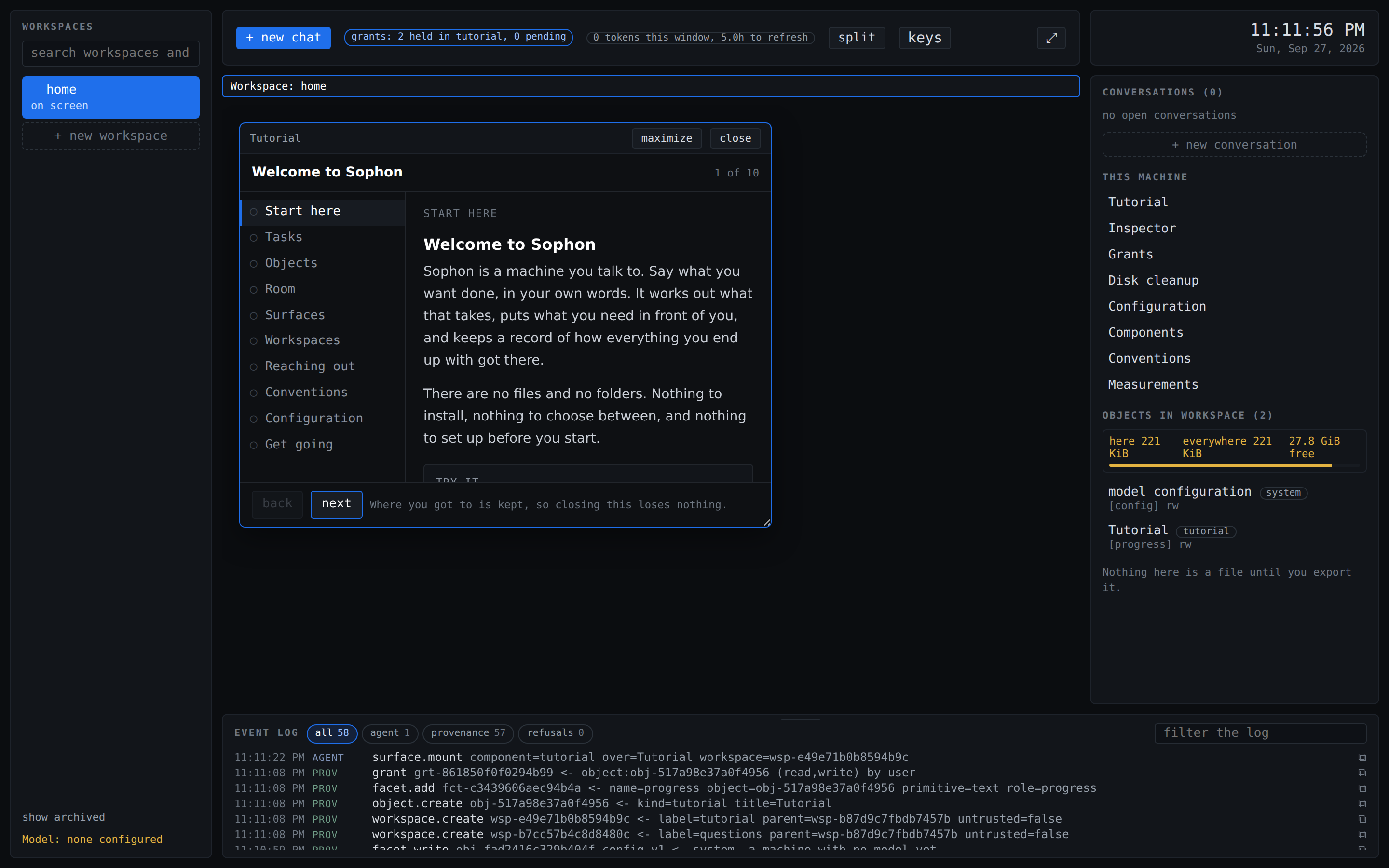
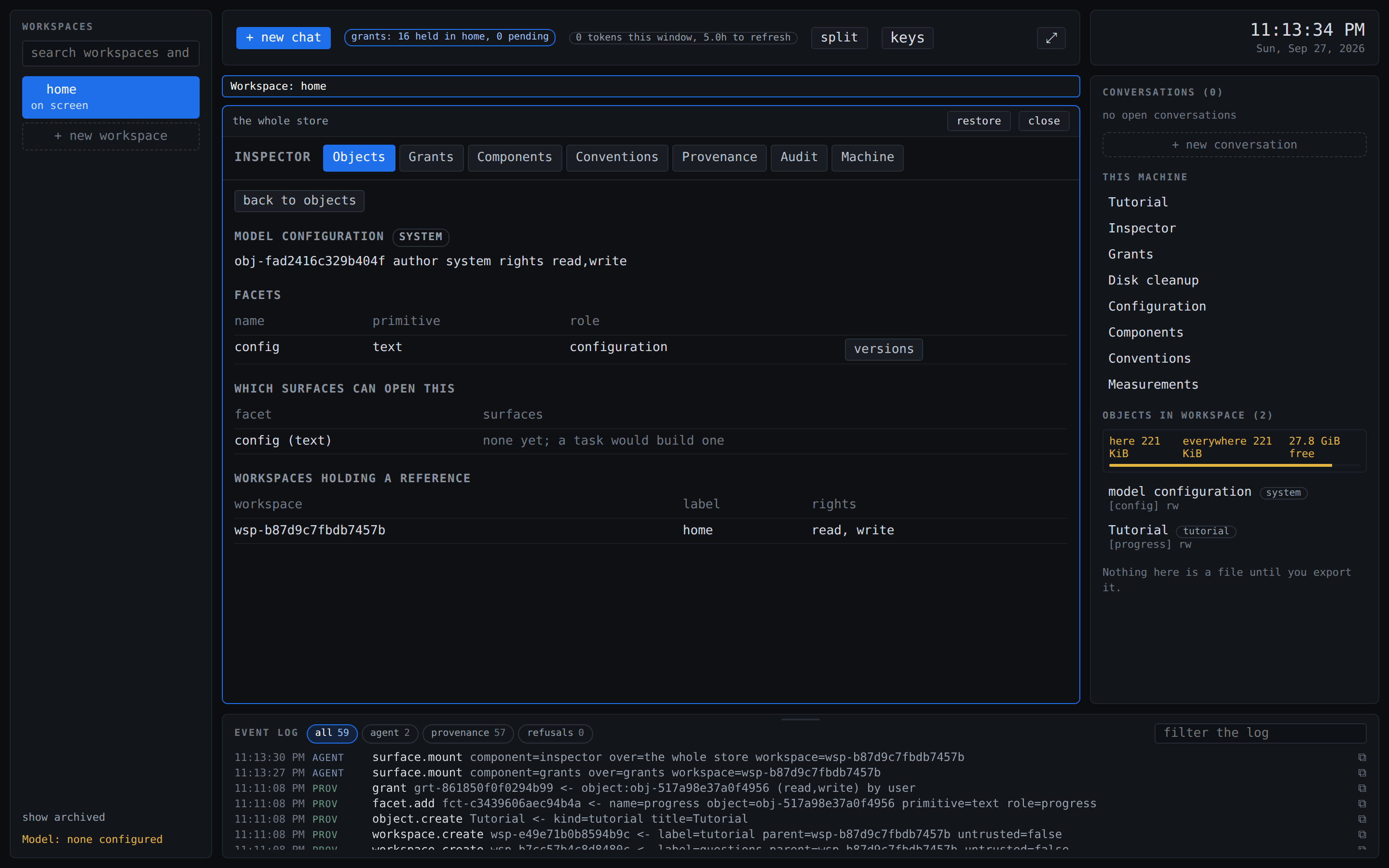
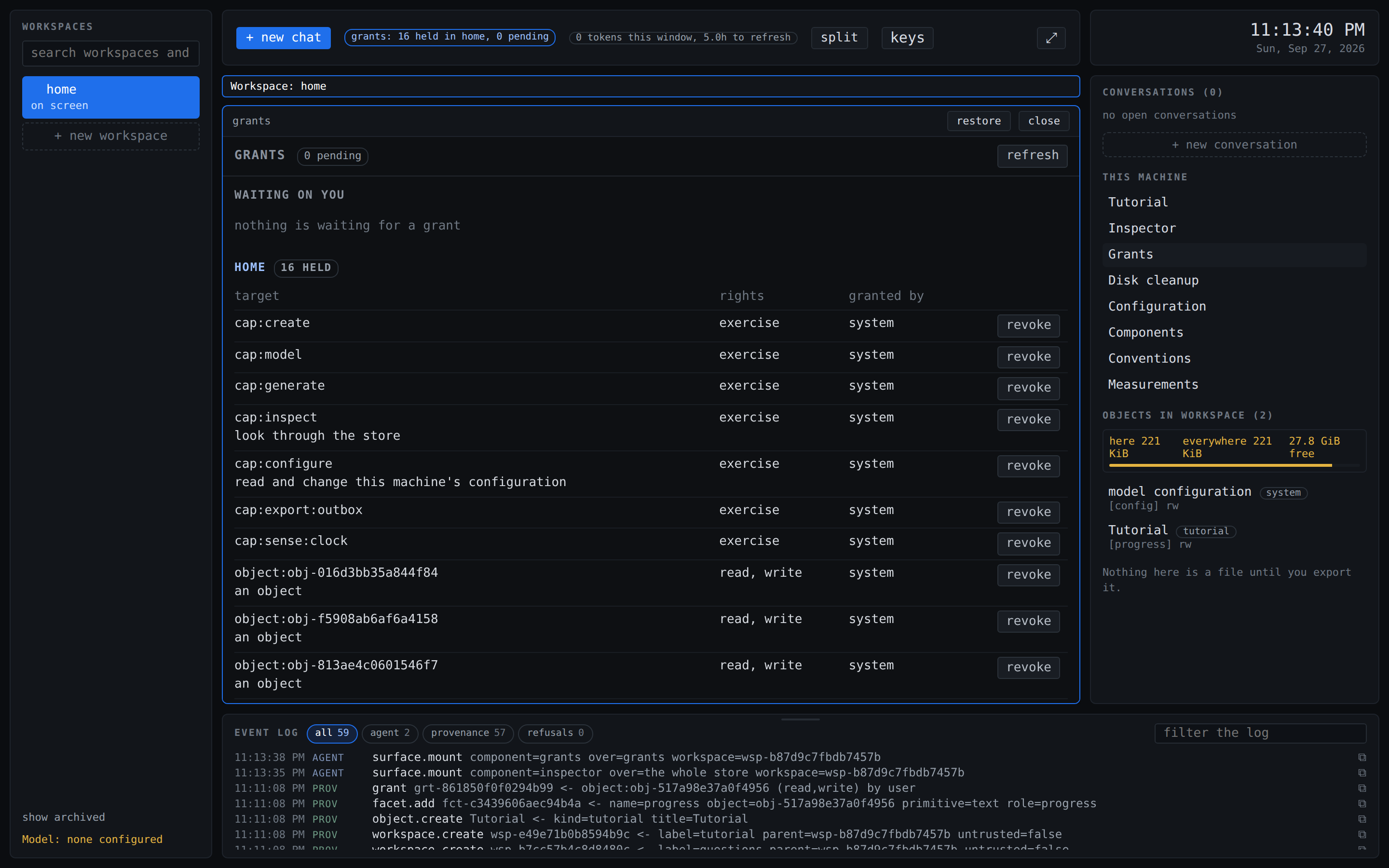
Links
The code is private, for now.
Changelog
- 2026-08-29: Started.
Last updated